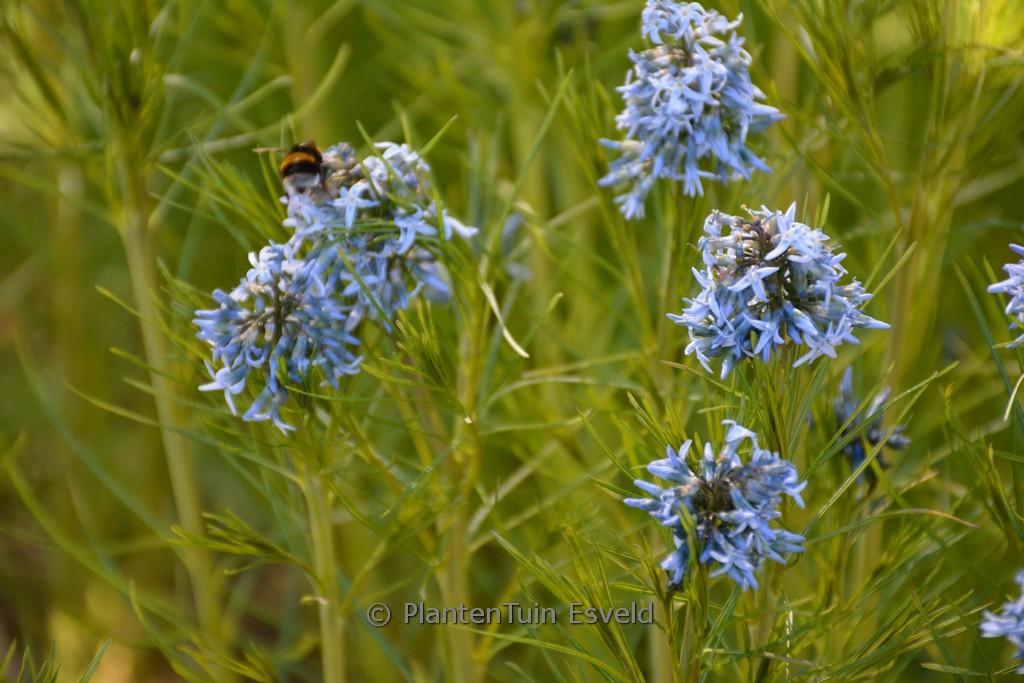
Amsonia hubrichtii (Arkansas Bluestar, Hubricht's Bluestar, Threadleaf Bluestar) — small, airy, terminal clusters of star-shaped, powdery soft-blue to ice-blue blossoms that emerge in late spring to early summer. A good pick for pollinators, fully hardy, prefers full sun for the best autumn colour and a dense, sturdy habit.
Quantity
Couldn't load pickup availability
🌿 Grown at our London nursery — collect in person or arrange local delivery
📦 Dispatched within 3 business days via Royal Mail
Product features
Botanical name: Amsonia hubrichtii
Common name: Arkansas Bluestar, Hubricht's Bluestar, Threadleaf Bluestar
Height: 60cm to 90cm
Spread: 60cm to 90cm
Foliage: Exceptionally fine, needle-like, feathery bright green leaves; turns golden-yellow to burnt orange in autumn
Flower: Small, airy, terminal clusters of star-shaped, powdery soft-blue blossoms in late spring to early summer
Attractive to wildlife: Yes; highly attractive to butterflies, native bees, and hummingbirds
Soil Type: Fertile, moist but well-drained loam, sand, or clay
Drought tolerant: Yes, once fully established
Hardy: Yes (RHS H6, down to -20°C)
Position: Full sun to partial shade — full sun gives the best autumn colour
Evergreen: No; herbaceous, dies back below ground in winter
Suitable for: Mass plantings, prairie-style borders, cottage gardens, naturalised meadows
Materials and care
Light: Prefers full sun for the best autumn colour and a dense, sturdy habit
Aspect: Thrives in open, south- or west-facing borders
Soil type: Prefers moderately fertile, loamy, or sandy soils
Drainage: Needs good drainage; dislikes heavy, waterlogged winter soil
Watering: Water regularly until established; drought-tolerant once mature
Pruning: Cut stems back by a third after flowering to encourage a bushier shape
Sap care: Wear gloves when cutting — the milky sap can irritate sensitive skin
End of season: Leave golden autumn foliage intact, then cut to the ground in late winter
Propagation: Divide established clumps in early spring, or take softwood cuttings in early summer