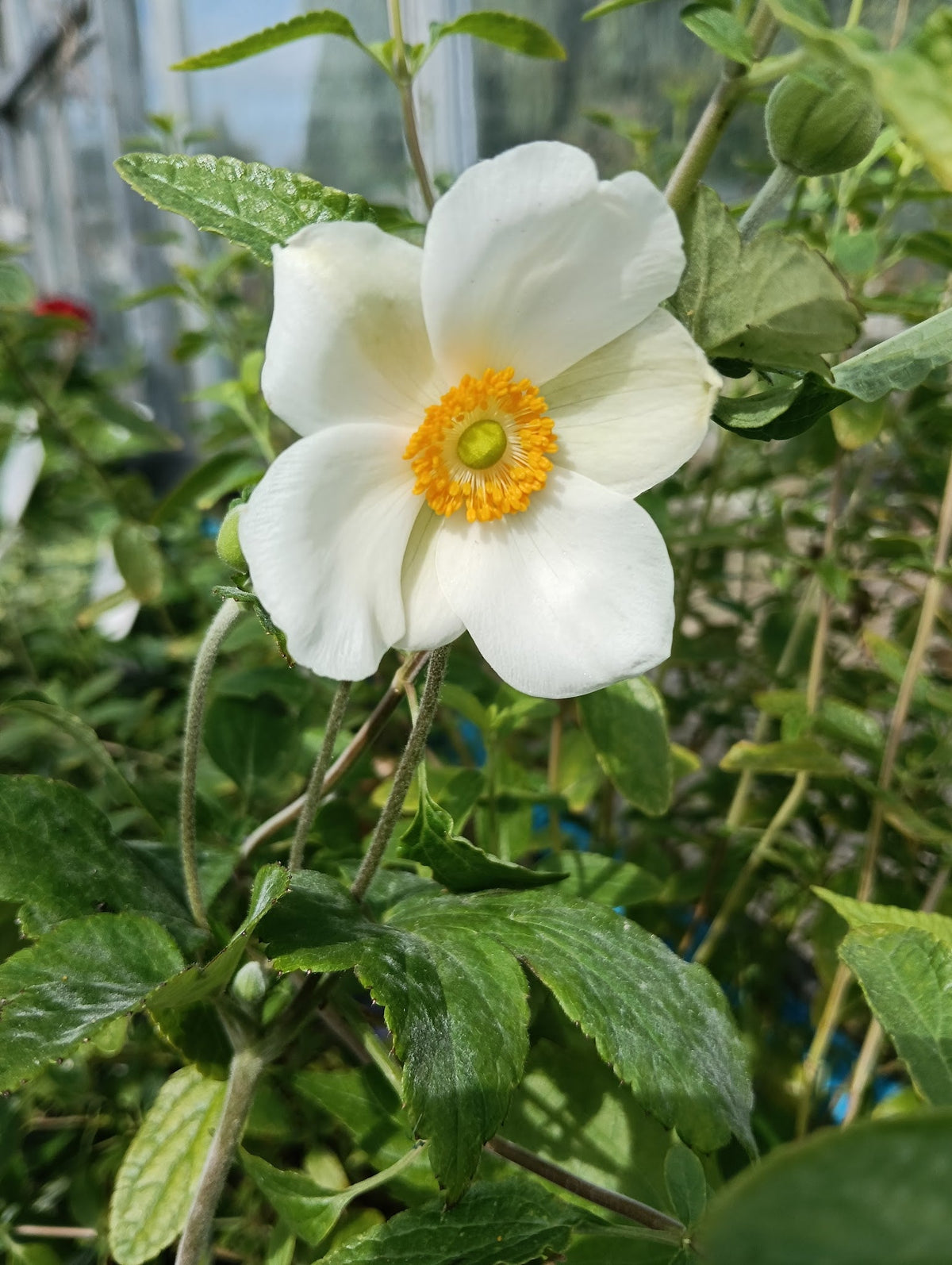
Anemone 'Honore Jobert' (Windflower 'Honorine Jobert', Japanese Anemone) — single, large, pure white petals arranged around a striking central ring of golden-yellow stamens and a green eye, held high on wiry stems from late summer to mid-autumn. Thrives in partial shade but tolerates full sun if the soil stays consistently moist.
Quantity
Couldn't load pickup availability
🌿 Grown at our London nursery — collect in person or arrange local delivery
📦 Dispatched within 3 business days via Royal Mail
Product features
Botanical name: Anemone × hybrida 'Honorine Jobert'
Common name: Windflower 'Honorine Jobert', Japanese Anemone
Height: 100cm to 120cm (3 to 4 feet)
Spread: 60cm to 90cm; spreads gradually via underground runners
Foliage: Large, deeply divided, three-lobed dark green leaves forming a lush basal mound
Flower: Single, large, pure white petals around a golden-yellow stamen ring and green eye, held high on wiry stems late summer to mid-autumn
Attractive to wildlife: Highly attractive to late-season pollinators, especially bees and hoverflies
Soil Type: Fertile, humus-rich, moist but well-drained soil; loamy or clay
Drought tolerant: No; requires reliably moist soil
Hardy: Fully hardy across the UK and northern Europe (down to -20°C)
Position: Partial shade to full sun; thrives best in dappled shade
Evergreen: No; dies back completely in late autumn, returns in spring
Suitable for: Shady borders, cottage gardens, woodland edges, underplanting trees
Materials and care
Light: Thrives in partial shade but tolerates full sun if the soil stays consistently moist
Aspect: Perfect for dappled woodland borders, north-facing walls, or east-facing beds
Soil type: Prefers rich, fertile, humus-heavy soil with reliable drainage
Watering: Water regularly to keep the soil evenly moist, especially in hot summer spells
Deadheading: Cut back spent flower stems to the basal foliage
End of season: Cut dead foliage down to the ground in late winter or early spring
Mulching: Apply well-rotted compost or leaf mould around the base in spring
Division: Take root cuttings in early spring, or divide clumps in autumn/spring (dislikes being moved)