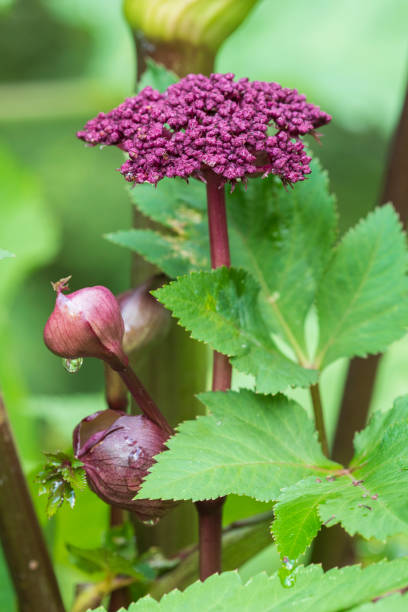
Angelica gigas (Korean Angelica, Giant Angelica, Purple Parsnip, Dangquai) — magnificent, large dome-shaped compound umbels of dense, rich plum-purple or dark crimson florets atop sturdy, red-tinted stalks from late summer into early autumn. Prefers partial shade but handles full sun well if the soil remains consistently damp.
Quantity
Couldn't load pickup availability
🌿 Grown at our London nursery — collect in person or arrange local delivery
📦 Dispatched within 3 business days via Royal Mail
Product features
Botanical name: Angelica gigas
Common name: Korean Angelica, Giant Angelica, Purple Parsnip, Dangquai
Height: 120cm to 150cm
Spread: 60cm to 120cm
Foliage: Large, exotic-looking, shiny green, deeply divided leaves with inflated purplish sheaths
Flower: Large dome-shaped compound umbels of dense, rich plum-purple florets atop red-tinted stalks, late summer into early autumn
Attractive to wildlife: Exceptionally high pollinator appeal — bees, butterflies, and hoverflies
Soil Type: Deep, humus-rich, highly fertile, moisture-retentive loamy soil
Drought tolerant: No; requires consistently moist soil
Hardy: Fully hardy, but typically short-lived/monocarpic (dies after setting seed)
Position: Partial shade to full sun; thrives in dappled woodland edges
Evergreen: No; dies down completely in late autumn
Suitable for: Back or middle of cottage borders, prairie schemes, bog gardens, streamside plantings
Materials and care
Light: Prefers partial shade but handles full sun if the soil remains consistently damp
Aspect: Thrives in sheltered, east-, west-, or south-facing borders and watersides
Soil type: Requires deep, fertile, humus-rich soil that mimics a damp meadow
Drainage: Prefers moisture-retentive soil but needs decent drainage
Watering: Water frequently to keep the ground reliably moist
Lifespan: Monocarpic — dies after setting seed, usually in its second or third year
End of season: Cut spent flowering stems down in early spring after seeds drop
Fertiliser: Apply a generous mulch of well-rotted compost each spring
Propagation: Best raised from fresh seed sown directly — long taproot resents transplanting