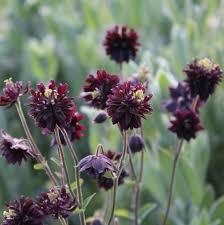
Aquilegia vulgaris 'Black Barlow' (Columbine 'Black Barlow', granny's bonnet 'Black Barlow') — striking, fully double, spurless flowers that resemble small pompons in a velvety, dark plum-purple to near-black; blooms late spring to early summer. A good pick for pollinators, fully hardy, full sun or partial shade — flowers best in dappled shade.
Quantity
Couldn't load pickup availability
🌿 Grown at our London nursery — collect in person or arrange local delivery
📦 Dispatched within 3 business days via Royal Mail
Product features
Botanical name: Aquilegia vulgaris var. stellata 'Black Barlow'
Common name: Columbine 'Black Barlow', granny's bonnet 'Black Barlow'
Height: 60cm – 80cm
Spread: 30cm – 45cm
Foliage: Deeply divided, fern-like, grey-green leaves
Flower: Fully double, spurless flowers resembling small pompons in velvety, dark plum-purple to near-black; late spring to early summer
Attractive to wildlife: Yes; attractive to bees, butterflies, and other early-season pollinators
Soil Type: Fertile, moist but well-drained loam, chalk, sand, or clay
Drought tolerant: No; prefers consistent moisture
Hardy: Yes (RHS H7); easily survives severe winter freezes
Position: Full sun or partial shade; best in dappled shade, especially in hotter climates
Evergreen: No; dies back completely to ground level in winter
Suitable for: Cottage gardens, woodland borders, shaded beds, wildlife gardens, cut flowers
Materials and care
Light: Full sun or partial shade — flowers best in dappled shade
Aspect: Prefers sheltered or partially shaded borders
Soil type: Fertile, humus-rich, moist soil; grows well in loam or sand
Drainage: Moist but well-drained; dislikes waterlogging or drying out completely
Watering: Water regularly to keep soil evenly moist, especially in hot spells
Foliage protection: Watch for leaf miner damage and slugs on spring growth
Deadheading: Cut back spent flower stems to the base to prevent self-seeding
End of season: Cut the entire plant down in late autumn
Propagation: Self-seeds freely; sow seed in a cold frame in autumn/spring — division not recommended