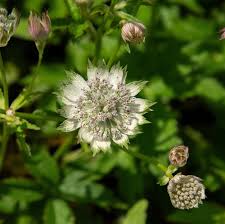
Astrantia major 'Snow Queen' (Greater Masterwort 'Snow Queen', Hattie's Pincushion, Melancholy Gentleman) — branching stems topped with delicate, star-like umbels of white pincushion florets, ringed by large, papery, white bracts subtly tipped with green. A good pick for pollinators, fully hardy, prefers partial or dappled shade but tolerates full sun if the soil stays consistently damp.
Quantity
Couldn't load pickup availability
🌿 Grown at our London nursery — collect in person or arrange local delivery
📦 Dispatched within 3 business days via Royal Mail
Product features
Botanical name: Astrantia major 'Snow Queen'
Common name: Greater Masterwort 'Snow Queen', Hattie's Pincushion, Melancholy Gentleman
Height: 60cm to 75cm
Spread: 45cm to 60cm
Foliage: Basal clumps of deeply-cut, palmate, serrated mid-green leaves
Flower: Star-like umbels of white pincushion florets ringed by large, papery, white bracts tipped with green
Attractive to wildlife: Yes; highly attractive to bees, butterflies, and hoverflies
Soil Type: Fertile, humus-rich, moisture-retentive but well-drained soil
Drought tolerant: No; prefers consistently damp soil
Hardy: Yes (RHS H7, down to below -20°C)
Position: Partial shade to full sun — prefers a cool, dappled spot
Evergreen: No; dies back entirely below ground in winter
Materials and care
Light: Prefers partial or dappled shade, tolerates full sun if soil stays wet
Aspect: Best suited to sheltered, north-, east-, or west-facing borders
Soil type: Requires fertile, heavy, humus-rich soil that retains moisture
Watering: Water regularly and deeply to keep soil consistently damp
Deadheading: Cut back spent stems promptly to stimulate a second flush of white blooms
End of season: Cut dead foliage down to the base in late winter/early spring
Mulching: Apply well-rotted leaf mould or compost annually in spring
Propagation: Divide established clumps in early spring or autumn