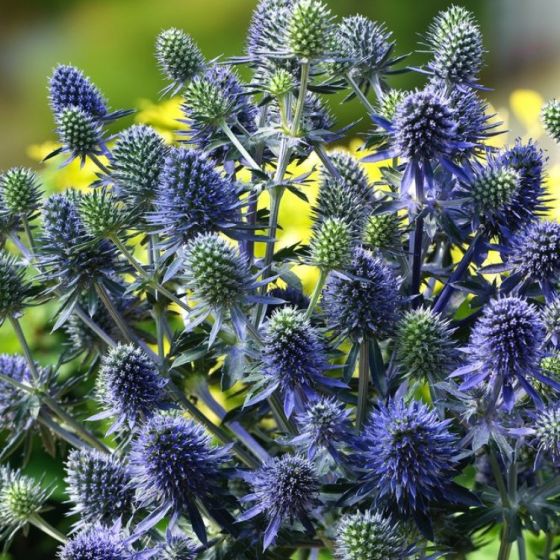
Eryngium planum (Blue eryngo, sea holly) — masses of small, egg-shaped, intense steel-blue flower heads surrounded by narrow, spiky, silver-blue bracts, blooming mid-to-late summer. A good pick for pollinators, fully hardy, full sun — needs maximum direct sunlight to produce intense blue stems.
Quantity
Couldn't load pickup availability
🌿 Grown at our London nursery — collect in person or arrange local delivery
📦 Dispatched within 3 business days via Royal Mail
Product features
Botanical name: Eryngium planum
Common name: Blue eryngo, flat sea holly, sea holly
Height: 60cm – 90cm
Spread: 45cm – 60cm
Foliage: Heart-shaped, smooth, dark green basal leaves; spiny, blue-tinted stem leaves
Flower: Small, egg-shaped, intense steel-blue flower heads with spiky silver-blue bracts, July to September
Attractive to wildlife: Yes — exceptional nectar plant for bees, butterflies, hoverflies
Soil Type: Poor to moderately fertile sand, loam, or chalk; sharp drainage required
Drought tolerant: Yes, highly resistant once taproot established
Hardy: Yes, extremely hardy (RHS H7)
Position: Full sun
Evergreen: No
Suitable for: Gravel gardens, coastal landscaping, prairie borders, cut and dried flowers
Materials and care
Light: Full sun — needs maximum direct sunlight for intense blue stems
Aspect: South- or west-facing, hot, sunny, exposed locations
Soil type: Poor to moderately fertile soil — sandy, chalky, gravelly, or loamy
Drainage: Sharply well-drained essential — taproot rots in wet winter conditions
Watering: Water regularly the first summer; drought-tolerant once established
Foliage protection: Wear thick gloves — flower bracts are sharp and spiky
Deadheading: Cut spent flower stems to the basal rosette
End of season: Leave spiky seedheads for winter interest; cut back hard in early spring
Propagation: Sow seed in a cold frame in autumn/winter, or take root cuttings in winter